Himalaya Shipping just reported its best quarter ever. EPS went from $0.02 to $0.29 in one year. The Capesize ship order book is at a 25-year record low. And the stock has already run 156% in 12 months, broke through its 52-week high this week, and is trading 25% above every analyst’s price target. That tension — genuinely great business, dangerously hot stock — is the whole story here.
What Q4 2025 Actually Looked Like
Himalaya Shipping (NYSE: HSHP) reported Q4 results on February 10, 2026. The numbers weren’t just good — they were the best in the company’s four-year history:
- Operating revenues: $42.1M (up from $29.6M in Q4 2024, +42% YoY)
- EBITDA: $33.3M (up from $21.3M, +56% YoY)
- Operating profit: $26.0M (up from $14.0M, +86% YoY)
- Net profit: $13.5M, or $0.29 per share — versus $1.1M and $0.02 per share a year ago
That EPS comparison is a 1,350% jump. One year. The driver: time charter equivalent (TCE) earnings — the industry’s measure of daily revenue per vessel — rose from $27,800/day in Q4 2024 to $39,600/day in Q4 2025. When you’re running 12 ships at that rate, the math gets interesting fast.
Operating expenses held steady at $7.0M for the quarter ($6,400/day per vessel). G&A was $1.2M. That leaves a massive operating leverage gap: revenues surged 42% while costs barely moved. That’s the whole appeal of the shipping cycle model.
Analysts raised their 2026 revenue consensus from $157M to $176M following the print. That’s a $19M upward revision in a single quarter, driven by what multiple analysts are calling a structural re-rating of the cycle.
The Structural Thesis: Why This Isn’t Just One Good Quarter
CEO Lars-Christian Svensen was direct on the earnings call: 2026 has had the best start for the Capesize and Newcastlemax market since 2010. The specific drivers in Q4:
- Iron ore from Brazil: +18% YoY
- Iron ore from Australia: +9% YoY
- Bauxite from Guinea: +21% YoY (a newer Capesize demand driver tied to aluminum supply chains)
- Capesize ton-mile demand overall: +9% YoY
That’s the demand side. The supply side is where things get really interesting.
The Capesize and Newcastlemax order book currently stands at 12% of the existing fleet — the lowest in 25 years. Active shipyards have fallen 60% from their 2008 peak. Most available yard capacity through 2027-2028 is already spoken for by container ships and LNG carriers. If demand for bulk carriers increases meaningfully, there’s literally no supply response available in the near term.
This is the bull case in its simplest form: demand grows, supply can’t respond, rates stay elevated, HSHP earns $1+ in EPS against a $14 stock. Forward P/E of 12x. PEG of 0.27.
January 2026 backed this up somewhat — TCE came in at $32,400/day. That’s down from Q4’s peak, but it’s still nearly double the company’s all-in cash break-even equivalent of $17,400/day.
The Fleet Edge
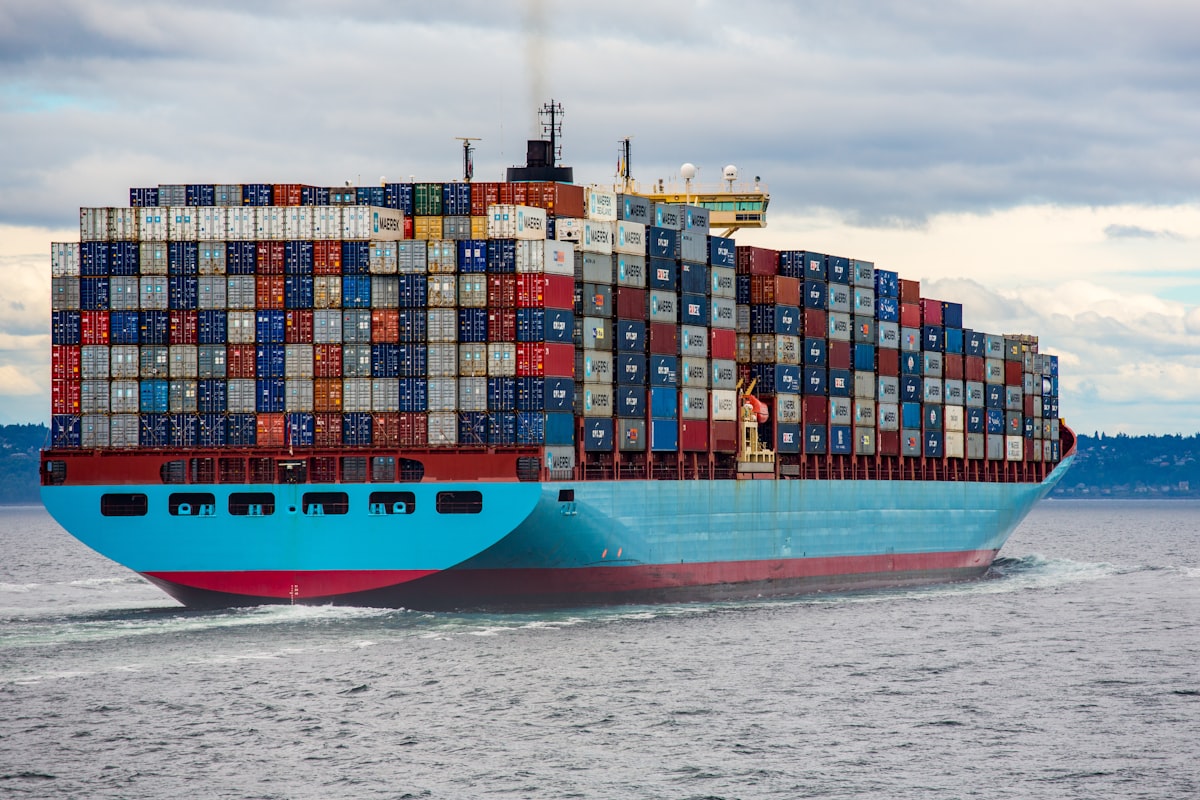
HSHP’s 12 vessels are all Newcastlemax bulk carriers — 210,000 DWT each, among the most efficient ever built. Since the company’s inception in 2021, its fleet has earned an average 48% premium above the Baltic Capesize Index and 25% above comparable peers. When the market rate for similar vessels is $26,000/day, HSHP is typically earning $32,000-$38,000.
The company’s preferred strategy is index-linked time charters — capture the full upside when markets run hot, convert to fixed rates when they see value in the forward curve. For Q1 2026, they locked four vessels at ~$27,700/day. Mount Elbrus chartered at $30,000/day through June 2026. After March 31, though, 11 of 12 vessels will be exposed to spot market rates — the maximum possible leverage to wherever the Baltic Capesize Index moves.
One detail worth knowing before you size a position: this company has 3 employees. All vessel management is outsourced to third-party ship managers. That keeps costs lean, but it also means HSHP has limited hands-on operational control if something goes sideways with a vessel or management relationship.
The Valuation Picture
At $14.09 per share, here’s what the current market cap is paying for:
Market cap: $657M | Enterprise value: $1.31B
| Metric | Value |
|---|---|
| P/E (TTM) | 37.8x |
| Forward P/E | 12.0x |
| PEG ratio | 0.27 |
| Price/Sales | 4.98x |
| EPS next year (est.) | $1.17 |
| Dividend yield (TTM) | 5.32% |
| Forward dividend yield | 8.29% |
| Avg analyst price target | $11.33 |
The forward P/E of 12x and PEG of 0.27 make this look cheap on a growth-adjusted basis. Analysts are projecting $1.17 EPS for 2026 — a 3x jump from TTM earnings. That forecast requires TCE rates to average somewhere in the $32,000-$38,000 range through the year. If the cycle holds, HSHP at $14 is genuinely reasonably priced.
The dividend trajectory is worth watching. HSHP ties monthly distributions directly to earnings: it paid $0.07/share in October, $0.10 in November, $0.13 in December, then dropped to $0.06 in January (ex-date February 19). At January’s rate annualized, forward yield is about 5.1% at current prices. In a stronger quarter, that monthly number could jump significantly.
The problem is the average analyst price target is $11.33 versus a current price of $14.09. The stock is 25% above what every analyst currently covering it thinks it’s worth. That doesn’t make analysts right — FSLY jumped 40% on earnings and the consensus target was $10.80 — but it narrows the margin for error considerably.
The Debt Structure Is the Real Risk
This part tends to get buried in the bullish coverage. Himalaya Shipping financed its 12-ship fleet through sale leaseback arrangements. As of Q4 2025, that outstanding financing balance was approximately $700M.
Against a $657M equity market cap, you’re looking at an enterprise value of $1.31B — essentially half debt, half equity. Debt-to-equity sits at 4.26x. Interest expense ran $12.7M in Q4 alone — that’s roughly $51M annualized on $131.9M in TTM revenues. Debt service consumes close to 40% of the top line before anything else.
The leverage amplification is what drove the 1,350% EPS jump. When revenues surged from $29.6M to $42.1M in a quarter, the fixed debt costs didn’t move — all that incremental revenue flowed to profit. The same leverage works brutally in reverse. If TCE drops from $39,600/day to $25,000/day, HSHP’s net profit can collapse from $13.5M to near-zero or negative in a single quarter.
The TTM payout ratio is 177.96% — the company is currently paying out more in dividends than it earns on a trailing-twelve-month basis. That’s only sustainable in a rising-rate environment. The moment TCE rates correct meaningfully, the dividend gets cut. In the 2021-2022 cycle, the Baltic Capesize Index dropped more than 50% from peak to trough over 14 months.
Three Reasons This Could Go Wrong
1. The stock has already run. Hard. Up 54.84% YTD, 156% over the past year. RSI hit 84.54 this week — the “extremely overbought” zone by most technical frameworks. The stock punched through its 52-week high of $13.92 and briefly hit $15.40 intraday on Friday before closing at $13.56 (then opened Saturday at $14.09). Short float is only 1.36% — this isn’t a short squeeze; it’s real buying. But RSI 84 after a 156% run means the market has already front-run the thesis pretty aggressively.
2. TCE rates are already softening. Q4 2025 delivered $39,600/day. January 2026 came in at $32,400 — a sequential drop of 18%. Management chalked this up to seasonal factors and charter timing, and the broader market remains healthy. But if Q1 2026 TCE averages in the low-to-mid $30,000s rather than high $30,000s, the 2026 EPS estimate of $1.17 needs to come down. The market is pricing in an up-cycle that sustains; any cracks get repriced fast with a float of only 25.86M shares.
3. After March 31, the training wheels come off. Currently four vessels are on fixed charters. After March 31, 11 of 12 ships go to spot or index-linked exposure. That’s maximum leverage to wherever the Baltic 5TC Index goes. It’s great if rates hold. It’s painful if they don’t. The company’s all-in break-even is $17,400/day — that’s a real number, not a worst-case — but the range between $17,400 and $39,600 is where every version of the P&L lives. Betting on HSHP right now is essentially betting that rates stay in the top half of that range through year-end.
The Verdict
Himalaya Shipping is genuinely well-run. The fleet is best-in-class, the structural supply constraint story is real, and the Q4 numbers speak for themselves. If you bought this in October at $9-10, you were early on a compelling thesis. If you bought at $8 a year ago, you’ve more than doubled.
The question for new money is whether the next 50% is up or down from $14. The company needs TCE rates of roughly $35,000+ to justify the $1.17 EPS estimate that makes the forward P/E look cheap. January already came in at $32,400. Meanwhile, the stock is sitting on a four-month rally that puts it 25% above consensus value, with 11 of 12 ships going fully spot at the end of March.
The actionable level is $10-11. That’s where analyst consensus puts fair value, where the 200-day moving average sat before the recent breakout, and where the forward P/E is around 9x with an 11% dividend yield on 2026 estimates. At that price, even a modest TCE correction doesn’t kill the position.
At $14, you’re paying up for a cycle that’s already being priced in, with leverage working both ways and a chart that needs a breather. The story is right. The timing is the variable.
Watch the Q1 2026 TCE numbers. If they come in above $35,000, the bull case re-accelerates. If they slip further toward $28,000-$30,000, the estimates come down and the stock follows. That data point in mid-May is what matters most.
Compare this to how [Lemonade (LMND) handled its own “best quarter ever” moment](https://marginofalpha.com/lemonade-lmnd-best-quarter-ever-stock-fell-q4-2025/) — also a record earnings print, also a pre-market pop, also a question about whether growth already got priced in. Or look at [capital southwest (CSWC)](https://marginofalpha.com/capital-southwest-cswc-stock-analysis/), where the dividend sustainability question is the central underwriting variable. Different industry, same analytical lens. And if you want another 2025 shipping cycle angle, [Fastly’s edge network buildout](https://marginofalpha.com/fastly-fsly-underappreciated-ai-edge-play-q4-2025/) tells a similar story about what happens when infrastructure meets AI-era demand growth — the timing question is always the hard part.
*Disclaimer: This is not financial advice. I hold no position in HSHP or any company mentioned in this article. All data sourced from company earnings reports, Finviz, and analyst consensus data as of February 22, 2026. Always do your own research before making investment decisions.*