Yext (NYSE: YEXT) looks dull until you get past the stock chart. The business did $446.6 million in fiscal 2026 revenue, produced $107.3 million in adjusted EBITDA, stayed profitable, and now has an AI-search product management thinks can matter. That is the bull case. The bear case is easier: this is still a slow-growth software company, and the market has heard a lot of AI story stocks already.
At roughly a $690 million market cap and around 18x earnings based on third-party valuation data, Yext is not priced like a hot software name. It is priced like a company investors still half-doubt. That is exactly why it is worth a look.
What Yext actually does
Yext sells digital presence software to multi-location brands. The basic pitch is not glamorous, but it matters. Large brands need consistent business information, reviews, landing pages, and search visibility across Google, Bing, maps, directories, and now AI answer engines.
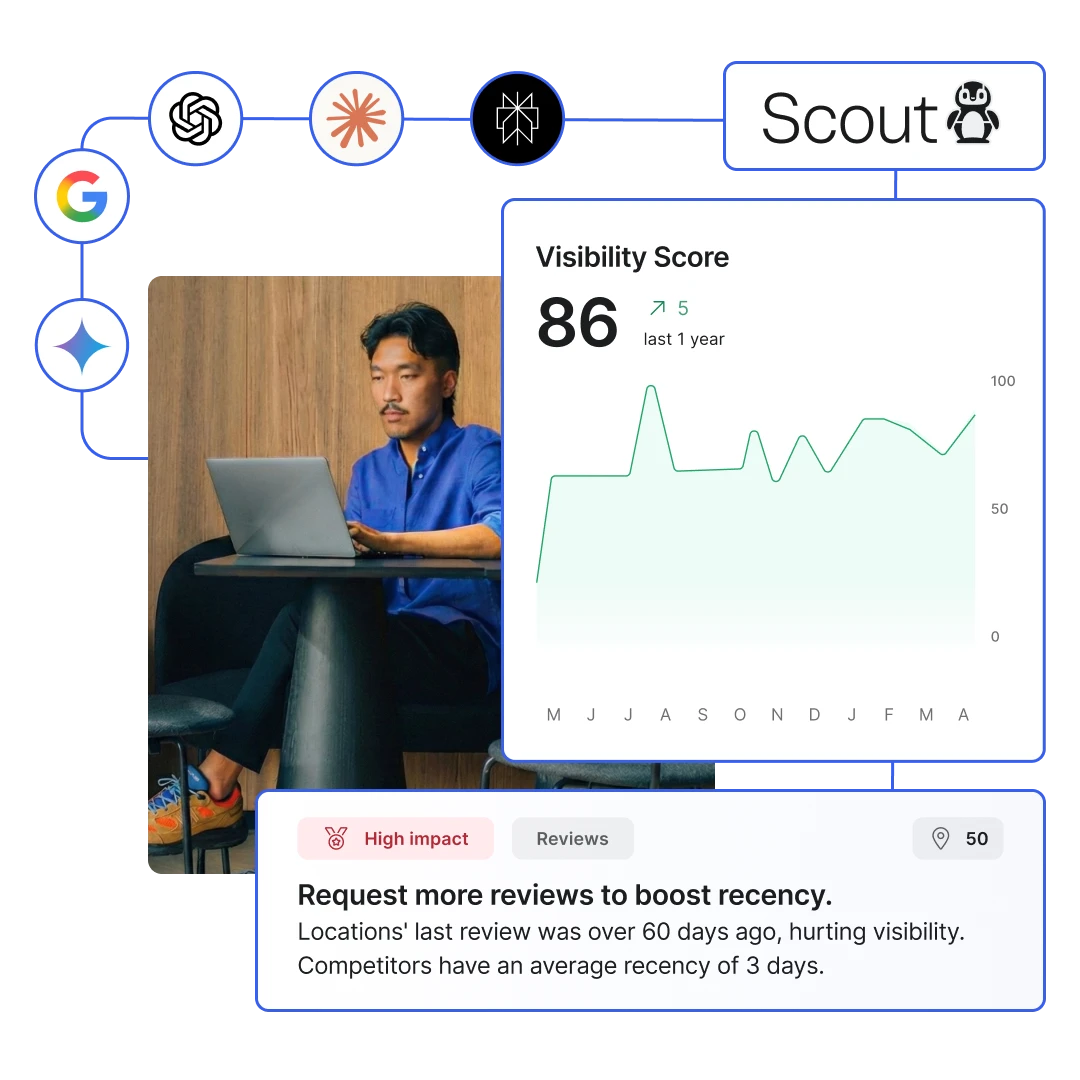
That last part is the new angle. In March 2025, Yext launched Scout, an AI-search and competitive-intelligence product built to help brands track how they show up across ChatGPT, Gemini, Perplexity, Claude, Google, and other search surfaces. Management is trying to drag Yext out of the “listings software” bucket and into the AI-visibility bucket.
I do not think that pitch is fake. If AI answer engines keep stealing search behavior from traditional Google results, brands will care a lot more about how they are cited, summarized, and compared. Yext already has some of the plumbing for that: a knowledge graph, publisher integrations, local search tools, and enterprise relationships.
The problem is that a good narrative is not the same thing as a great stock.
The numbers are better than the stock chart
Fiscal 2026 was a solid year on paper.
Here are the headline numbers from Yext’s fiscal year 2026 results:
- Revenue: $446.6 million
- Q4 revenue: $112.0 million
- ARR: $444.3 million
- Adjusted EBITDA: $107.3 million
- Adjusted EBITDA margin: 24%
- Q4 adjusted EBITDA margin: 26%
- GAAP EPS for FY26: $0.31
- Non-GAAP EPS for FY26: $0.56
- Tender offer launched to repurchase up to $140 million of stock
Those are not meme-stock numbers. They are the numbers of a software company that finally learned some discipline.
A few years ago, Yext looked like another mid-tier SaaS name that could never turn revenue into real profit. That part has changed. The company now produces actual earnings and enough cash flow confidence to talk seriously about returning capital.
That matters because the market usually gives unprofitable small-cap software companies very little room for error. Yext has at least earned the right to be judged on business quality rather than pure survival.
Why the bull case works
The bull case for YEXT comes down to four points.
1. It is profitable now
A lot of small-cap software names still ask investors to underwrite future margin expansion. Yext already delivered it. A 24% adjusted EBITDA margin on $446.6 million in revenue is a real result, not a slide-deck fantasy.
If you believe software multiples eventually reward cash generation again, Yext has a cleaner setup than many higher-growth peers that still cannot translate sales into earnings.
For investors who like smaller software stocks but hate funding endless dilution, that matters.
2. The valuation is not demanding
Using the recent portfolio price around $4.11 and a market cap near $691 million, Yext trades at roughly 1.5x trailing revenue. Third-party valuation data also puts the stock around 18x earnings.
Neither multiple screams “cheap enough to back up the truck,” but both are reasonable for a profitable software business with an AI-related product angle.
That is why Yext is interesting. If Scout gains traction or the company shows even modest reacceleration, the stock does not need heroic assumptions to move higher.
3. AI search gives management a fresh story to sell
Most companies claiming an AI angle are stapling a chatbot onto an old workflow. Yext’s angle is at least adjacent to a real problem.
Brands increasingly care about how AI engines describe them, which competitors get cited, how sentiment appears in summaries, and whether local business data is accurate across the web. Yext Scout is designed to track those issues and recommend actions inside the existing Yext platform.
That creates a decent product logic: measure visibility, benchmark competitors, then sell the tools to fix the problem.
If management is right that search is fragmenting across Google and AI engines, Yext has a shot at becoming a picks-and-shovels vendor for brand visibility rather than just another SEO tool.
4. Share repurchases give downside support
Management launched a tender offer to repurchase up to $140 million in stock. For a company with a sub-$700 million market cap, that is not a token gesture.
Buybacks do not fix a weak business. But when a profitable small-cap software company is willing to retire that much stock, it usually tells you management believes the shares are undervalued or at least not expensive.
That does not guarantee upside, but it can help support the stock if sentiment stays shaky.
Why I am not fully sold
This is where the YEXT stock analysis gets less comfortable.
Growth is still the main problem
Yext’s fiscal 2026 revenue was $446.6 million. That is fine. What matters more is how fast that number is growing, and this is where the story loses heat.
The company is much better at generating profit than it is at producing exciting top-line growth. Even the ARR trend looks mixed. Yext reported ARR of $444.4 million in Q2 fiscal 2026, up 15% year over year, but by Q3 fiscal 2026 ARR was $444.4 million again and actually down 1% year over year.
That kind of flattening is exactly why investors hesitate to pay up for the stock.
You can absolutely own a slower-growth software company if the valuation is low enough and capital returns are real. But you should not confuse that setup with a breakout compounder.
The AI story still needs proof
Scout sounds smart. It also sounds like the kind of product every digital marketing platform now wants to talk about.
The big question is still monetization.
Will customers pay meaningfully more for AI visibility tracking? Will Scout improve retention? Will it win net-new enterprise logos? Or is it just a smart story sitting on top of a mature platform?
Until investors see product adoption translate into numbers, the AI narrative deserves some skepticism.
Competition is real
Yext does not operate in a vacuum. Brands can spend across a messy stack of SEO software, listings tools, reputation platforms, local marketing agencies, and broader enterprise marketing suites. Even if Yext is right about the AI-search opportunity, it still has to prove it owns the best wedge.
That is harder than launching a feature page.
Small-cap software sentiment can stay cold
One frustrating truth about stocks like Yext is that the market can ignore them for a long time. A company can get more efficient, buy back stock, post profits, and still do nothing if investors think the category lacks growth.
That is the risk here. Yext may be fundamentally better than its stock action suggests, but “better” is not always enough.
How Yext compares with other small-cap software setups
I would put Yext in a different bucket from pure growth bets like Amplitude or more narrative-heavy AI names where the valuation depends on future operating leverage showing up later.
It also feels different from names where the real question is whether the market is mispricing the story or correctly identifying a trap, like NCNO.
Yext is more of a quality-repair story. The company has already done some of the hard work, namely becoming meaningfully profitable. Now it needs to prove that profitability did not come at the cost of long-term relevance.
That is also why I would pair this with a basic sanity check like our small-cap promotion trap checklist. Yext is not a promotion stock, but the framework is still useful: look for cash generation, real customers, believable catalysts, and evidence that management’s pitch shows up in reported numbers.
My take on YEXT stock
I think Yext is interesting, but I do not think it is a screaming buy.
If you want a profitable small-cap software company with a decent balance between downside support and optionality, YEXT has a case. A sub-2x sales multiple, real EBITDA, positive EPS, and a large buyback/tender offer is a better setup than most low-end software names get.
If Scout becomes more than a buzzword and helps reaccelerate demand, this stock probably works.
But if revenue stays sluggish and AI visibility tools turn into a crowded feature war, Yext may just remain a cheap stock that stays cheap.
At around $4, I can make the case for a starter position. Above $6, I would need to see cleaner growth before getting interested. That is the line for me.
The upside case is a re-rating toward a healthier small-cap software multiple if AI-search products gain traction and capital returns keep shrinking the share count. The downside case is simpler: the core business keeps moving, but not fast enough for investors to care.
Bottom line
Yext is a real business with real profits, and that already makes it more credible than a lot of small-cap software names. Fiscal 2026 revenue of $446.6 million, adjusted EBITDA of $107.3 million, and a $140 million tender offer are not the numbers of a broken company.
Still, this is not a clean momentum story. The stock needs proof that the AI-search narrative can turn into durable growth, not just a better investor presentation.
My view: YEXT is interesting below $4.50, less interesting above $6, and nowhere close to a stock you buy on faith.
This article is for informational purposes only and does not constitute financial advice. Always do your own research and consider consulting with a financial advisor before making investment decisions.
Sources:
- Yext Q4 and FY2026 results: https://investors.yext.com/news-events/press-releases/detail/382/yext-announces-fourth-quarter-and-fiscal-year-2026-results
- Yext Scout launch: https://www.yext.com/about/news-media/introducing-yext-scout
- Yext Scout product page: https://www.yext.com/platform/scout